


Status: In-development
Release date: TBA
The sun may still be wrapped in early morning's embrace below the horizon, and your neighbors' alarm clocks still silent before the break of day. But you've been awake long enough already to be full of coffee and an extra, celebratory, pastry. Soon you will make your way to your new charge: the local train station. You've been entrusted with the sworn and solemn duty, as its new station manager, of overseeing every operational and decorational detail.
Keep the station running in top form, ensure every traveler's needs are met, and make public transit such a delight and joy to use that the next person to propose a regional tax levy to double the number of expressway lanes is laughed out of the city. The job won't be easy, though. Crowds, constant maintenance, monitoring of stock in the shops and vending machines, balancing funding, and ensuring the safety of every visitor will require your constant attention.
Inspired by real world locations and my favorite transit systems around the world, Stop Shoving! immerses you in fully-simulated neighborhoods populated by NPCs with their own goals, needs, dreams, and frustrations. Every one of them individually and uniquely interacts with each other and the world you create.
Key FeatureEmergent Behavior
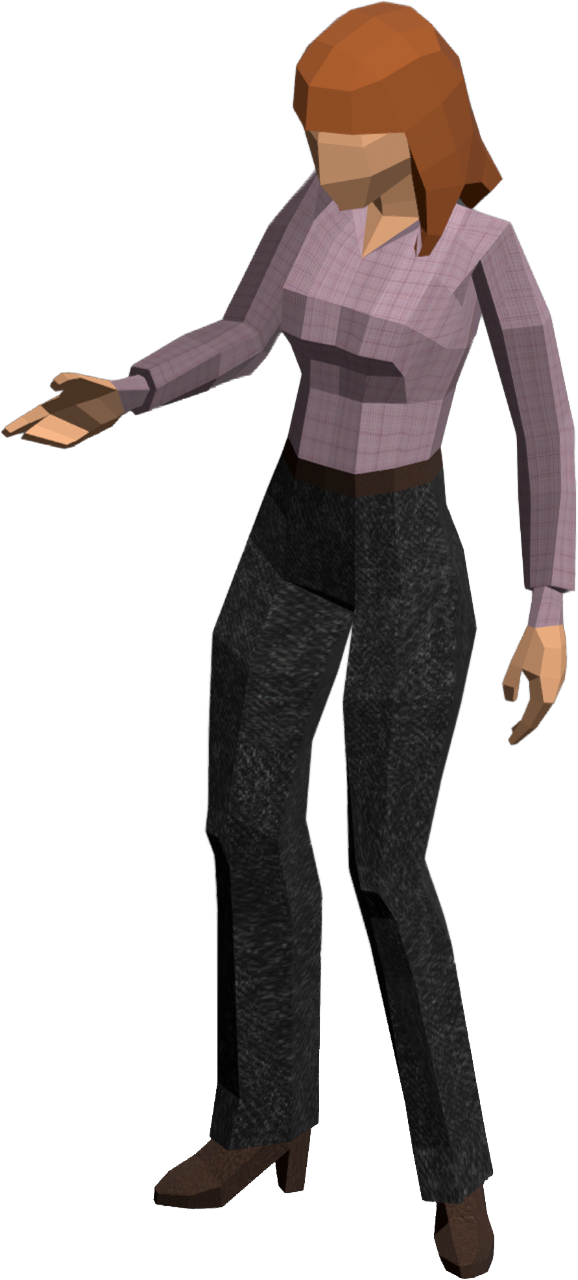
Every NPC is unique, with their own identity and traits, their own goals and needs. The simulated world provides tools and systems for NPCs to behave and interact, but there are no set paths and no fixed scripts. How they get what they need or reach the places they want to go depends on you, as station manager, making those things both available and easy to find.
You can influence these behaviors, even though you never have direct control. Good signage wards off confusion, allowing NPCs to find their way to exits, platforms, and shops. Seating staves off weariness and makes waiting for trains a bit less annoying. Ample and accessible waste and recycling bins keep your station from becoming a toxic dump (as long as they get emptied regularly). Plants remind your NPCs that there's more to this world than concrete and steel, and to keep going for at least one more day. PSAs encourage more socially cohesive behaviors like standing right and walking left on escalators (except in cities where it's standing left and walking right), depositing trash in bins, and less shoving or fare-evading.
The interplay between each NPC's unique character traits and your personal style of station management means no two play-throughs will be the same. And even on long-running games, there will always be room for tweaking and tuning the layouts and shop menus and decorations and amenities of your station to make it feel just right, whatever right feels like to you.
GameplayAdministration and Decoration
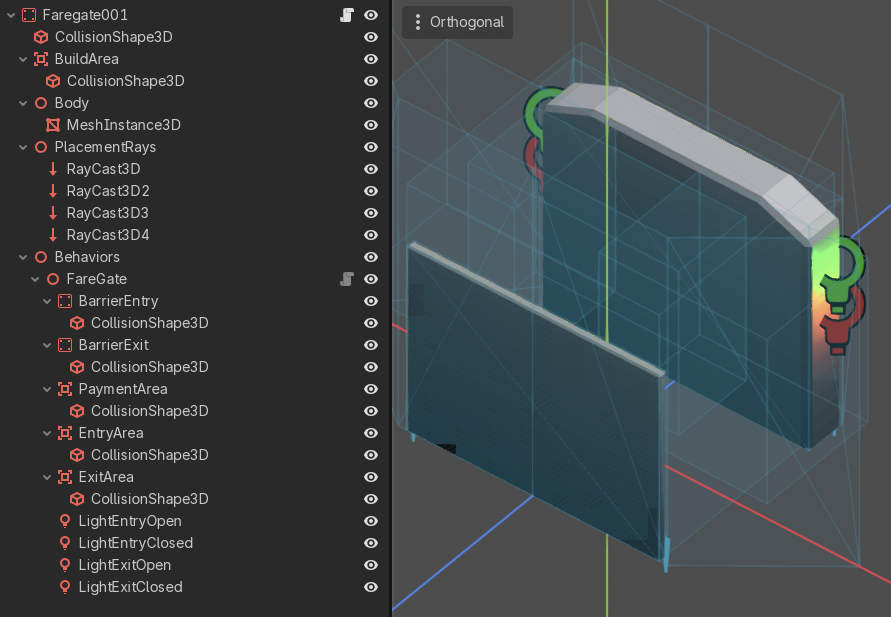
Your role is a bit more expansive than a typical station manager's. You'll be responsible for fares and basic station fixtures and maintenance, sure, but you're also going to need to keep an eye on shop and vending machine inventories, restaurant menus, wayfinding signage, lighting and crossing signals, trash collection, and even which windows are open for a nice cross-breeze on warm summer days to reduce your electric bill on air conditioning.
At your disposal is a broad collection of furnishings, signs and displays, plants, lights, gates and barricades, waste bins, and more. How much of that work you do on your own and how much you hand off to (hopefully well compensated) staff you hire is up to you.
And if you don't want to embark on an all-nighter micromanaging session to get the perfect station rating, you can always just play through as a cozy room decorator with a mass transit theme. Or maybe you've got some stress in your life that can only be addressed by watching a bunch of NPCs struggle to make it through your escape room / obstacle course station. I'll silently judge you for it, but I won't narc.
GameplayCrowd Control
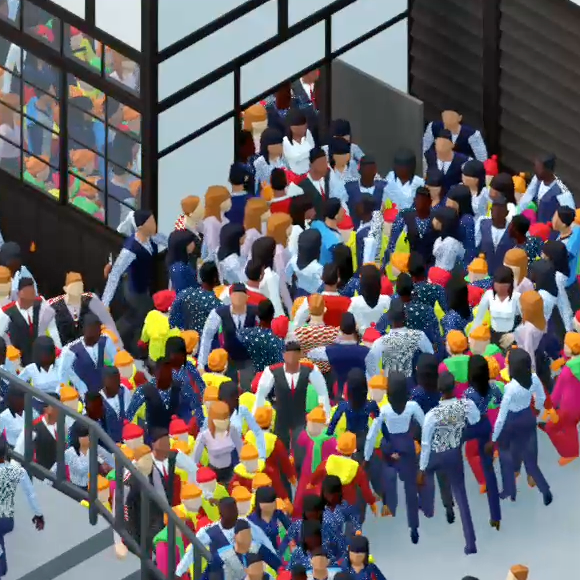
It's not so hard to cater to the needs of a few NPCs with stable preferences on a peaceful day, but you're going to have a more difficult charter than that. With limited space in a small station for snacks and drinks or spots to sit and rest, can you keep the peace among a swarming crowd of NPCs going home after the big summer festival lets out? Or will you find yourself trampled by thousands of increasingly frustrated NPCs, impatiently waiting for their trains to arrive, disgust boiling over as trash cans overflow and elbows clash with each other?
Your station's reviews, your funding, and maybe even your job depend on weathering these sudden storms.
Maybe you were just built for that, and anything less than the entire city descending upon your station at once would be too boring to even bother showing up for work. In more creative and challenging modes, ramping up NPC spawn rates, or tuning the balance of NPC traits to make the crowds less patient, more irritable, and just generally ruder and disregarding of social norms will get your heart racing. Unlike most of our day jobs, yours as the station manager can be as peaceful or chaotic as you decide it should be.
Frequently Asked Questions
-
Who's behind the game and what's under the hood?
The game currently has one lonely little dev building it: yours truly. It is fully human-developed, with absolutely zero genai/llms involved, and based on the Godot engine with various custom bits and extensions.
For development, I work in a mix of the Godot editor and Gram (a fork of Zed, with all the llm and agent trash ripped out) using GDScript and C#. All the custom modeling is done by hand in Blender (NPC models are the only caveat; those are also human-made, but have been licensed from a design studio that specializes in architectural concepts and visualizations). Vector and raster art are done with a mix of Inkscape and Photoshop (sorry, I also do a lot of photography, so Adobe already had their claws in me for that program).
Because I don't have a musical bone in my body, the mood-setting soundscape is contributed by Evan, who makes all his beeps and blorps with programs like Acid Pro. I continue to push back on his suggestions for an all-accordion soundtrack. I may, however, eventually yield to him on that because he does provide an invaluable non-programming service, which is to constantly remind me that all my little development side-quests may be fun and intellectually rewarding, but they also delay the Early Access release.
-
Why train stations?
I'm a public and mass transit dork, through and through. I spent my formative years enthralled with the Great Society Subway (the DC Metro), fell in love with the Seoul Metro at first sight, am captivated watching the flow of the crowds through Shinjuku and Shibuya stations in Tokyo, delighted in the elevated views of streets below and the surrounding mountains from Metro de Medellín trains, and even love what the future may hold for my hometown Link light rail in Seattle (already earned the "First and Only Light Rail Across a Floating Bridge" achievement!).
My collection of public transit cards and passes from around the world grows at every opportunity, and acquiring one is without fail the very first thing I do when arriving somewhere new. I've even gone out of my way to get public transit cards in places that barely have public transit, like my yellow Nuup Bussii card from Nuuk, Greenland with its grand total of five bus routes, two of which are just express versions of other routes.
The earliest idea for Stop Shoving! came to me while I was waiting on the train at a Seoul Metro station one day and something about the stylized station exit map I was looking at to avoid eye contact with anyone else on the platform (because why would you ever want to meet eyes with a stranger?), without losing myself in my phone again, struck a chord. The initial concepts were hazy, and shifted over the early phases of design and development into what I have now: a real time neighborhood transit stop large crowd simulation with thousands of fully realized and independent characters who you need to keep as happy as possible while also getting to fuss about over the best placement of plants and vending machines and community message boards and decorative festival lanterns and ...
-
How big do the crowds get?
My primary dev machine is a several year old M2 Macbook Pro and my Windows machine is even older and still built around a 1080. As of me typing these words (the ones you're reading right now, yes even that one), the Macbook Pro comfortably simulates just short of 2,000 active and fully independent NPCs at 30+ fps. The Windows machine fares about the same, generally, though I don't test on there constantly. This includes the fully simulated station environment, all physics simulations with full collisions, the world around the NPCs through which they are actively navigating, and all interactions with each other and the individual objects whether pre-populated or player-placed. It's not just a stripped down "how many NPCs can stand next to each other on a flat surface" rigged benchmark.
The simulation code is currently mostly CPU bound, and performance tends to falter there well before the GPU cores begin to think about maybe possibly having to break a tiny sweat. There's still plenty of room for optimization, and at least some of the simulation work is tentatively slated to move into compute shaders. Memory usage could always improve, but that's not in a troubling place yet, with a fully-loaded simulation still clocking in at just a couple hundred MB.
Between most people having much nicer/newer machines than me and the potential for future optimizations, the hopes and dreams are to hit 2-5x the current limit while also filling out a lot more functionality in the overall simulation.
-
Will there be an Early Access?
Very much planning on one, though a target date has not yet been decided. I'm working through a list of must-haves for something that demonstrates the core simulation loop and has the bare minimum of playable content to make it worth installing and providing feedback.
This would include at least one fully-modeled station (even if it doesn't include finalized textures or finely-tuned meshes), functional train schedules, consistent end-to-end behavior patterns for NPCs (for at least boarding and exiting goals; might leave things like shopping for a later update), and a reasonable complement of NPC-influencing station props to decorate with.
I do not intend to block it on having perfect NPC behaviors. In the first few updates during Early Access they may be a little jittery in transitions, or they might bump into each other more than they should, or they might look funny when opening doors, and so on. But the core of the navigation and world interaction will need to be in place. Thankfully that's already just about done.
-
Will station management involve lots of charts and graphs and tables of data?
A fellow or former spreadsheets in space user, are you? While I don't envision something quite as intricate as what residents of New Eden have obsessed over, using in-game data sources of NPC emotional states and interaction events to better plan and maintain your station is/will-be a key part of the gameplay loop for anyone not just enjoying the cozy room decorator aspect.
-
Where/how will the game be released?
Unless something wild happens, the game will be released through Steam, for all supported platforms.
-
Which platforms will the game support?
MacOS (Apple Silicon only) and Windows for sure. Releasing for Linux/SteamOS is high on my wishlist, but may happen after the initial Mac and Windows release. I am not currently planning any mobile or console releases. Much as I enjoy my Switch, I don't think they're the right platform for this project.
-
What languages will the game be available in?
Sadly, I'm only conversational or semi-functional in a few, and fluent in fewer. The initial release will probably be American English only. If I can get enough funding, I would very much like to followup with full support for West/Central Canadian English to expand the game to a more international audience.
-
Is there any use of GenAI/LLMs in the game or its development?
Absolutely none, and there never will be. I'd rather drink acid than stoop that low. If I expect people to care enough to play and enjoy something I present to them, then I need to care enough to make it. Everything in Stop Shoving! is made with human intention and human effort.
-
Is there a Discord for updates?
Check the links at the very bottom of the page for all the social and community sites on which I am, or will try to be, active. If it's not there yet, it will be eventually.
-
Are there more questions to be answered?
Probably!